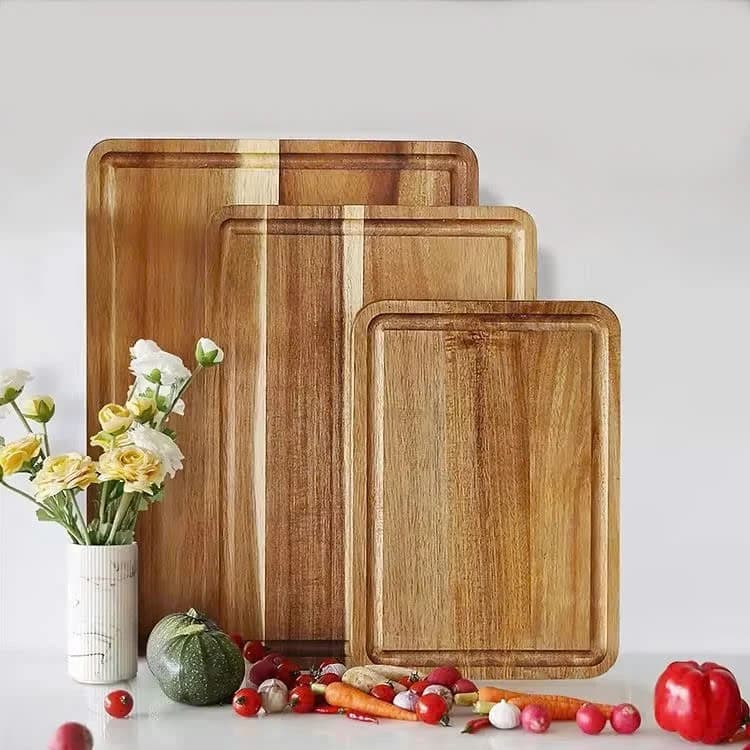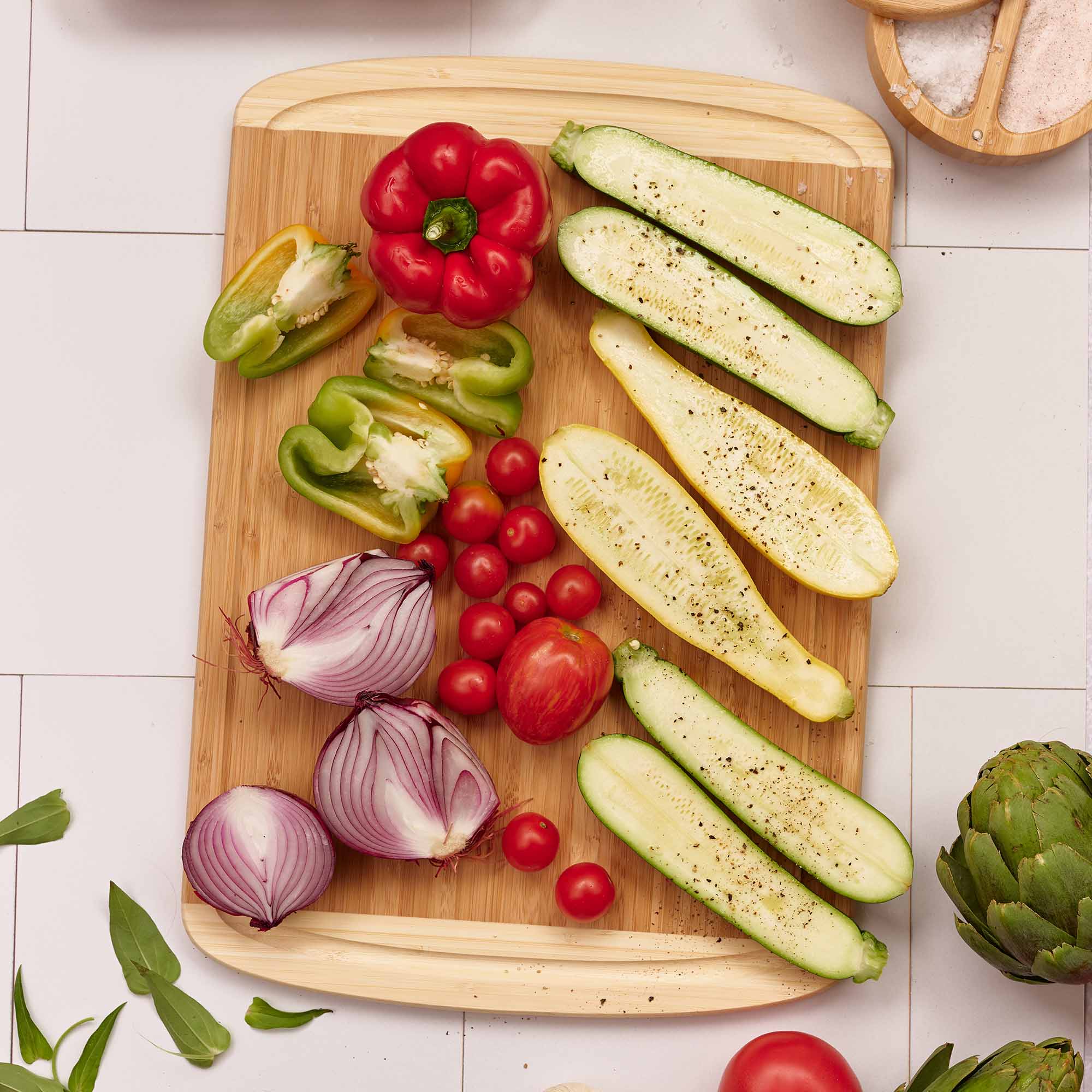
One timber can produce very different boards. In teak, the arrangement of the components is a central part of the design.
Edge grain, end grain and herringbone offer three starting points for a collection. They influence the visual rhythm, component layout and development brief. Choosing between them starts with a clear picture of the intended product: a daily preparation board, a substantial countertop piece or a patterned serving design.
01 / A LINEAR SURFACE
Edge grain: a clear foundation.
Edge-grain construction presents the long narrow edges of timber strips on the working face. In a teak board, this creates a directional surface that suits a straightforward rectangle, a grooved format or a serving paddle.
The design brief should describe strip widths and the desired balance of colour. A restrained layout and a strongly contrasting layout can feel like different collections even when the species and overall size are the same. Approve the visual arrangement alongside the outline and edge treatment.
02 / A BLOCK-BUILT FACE
End grain: a different rhythm.
In an end-grain board, the cut ends of the wood fibres form the working surface. The visible blocks create a different pattern from the long lines of an edge-grain construction. Rectangular and round formats can both use this approach.
Thickness, block proportions and overall weight become prominent design choices. A deep board may need a carefully planned way to lift or move it; a round version needs the pattern and perimeter considered together. Review handling and surface details in a physical sample, rather than relying on a photograph alone.
03 / A COMPOSED PATTERN
Herringbone: define the geometry.
Herringbone arranges rectangular pieces in a staggered, interlocking pattern with right-angle joints. It differs from chevron, where angled ends meet along continuous V-shaped lines. A drawing makes that distinction unambiguous.
The pattern name does not, by itself, define the grain orientation on the working face. Specify both the arrangement and the component orientation, then agree strip proportions, pattern direction and how the layout meets the perimeter. For the Khởi Nguyên collection, herringbone begins as a development brief to be resolved through sampling.
“The right construction begins with the role the board will play.”
04 / COMPARE THE DECISIONS
Choose the role, then the details.
The final brief should also cover the intended use, dimensions, finish, branding, packaging and destination-market requirements. Any performance claim needs its own evidence; the construction name is not a substitute for checking the finished product.
Compare the formats on the teak cutting board page, or explore teak serving boards when presentation is the main purpose. A focused collection can use one construction throughout, or combine several around a shared set of details.