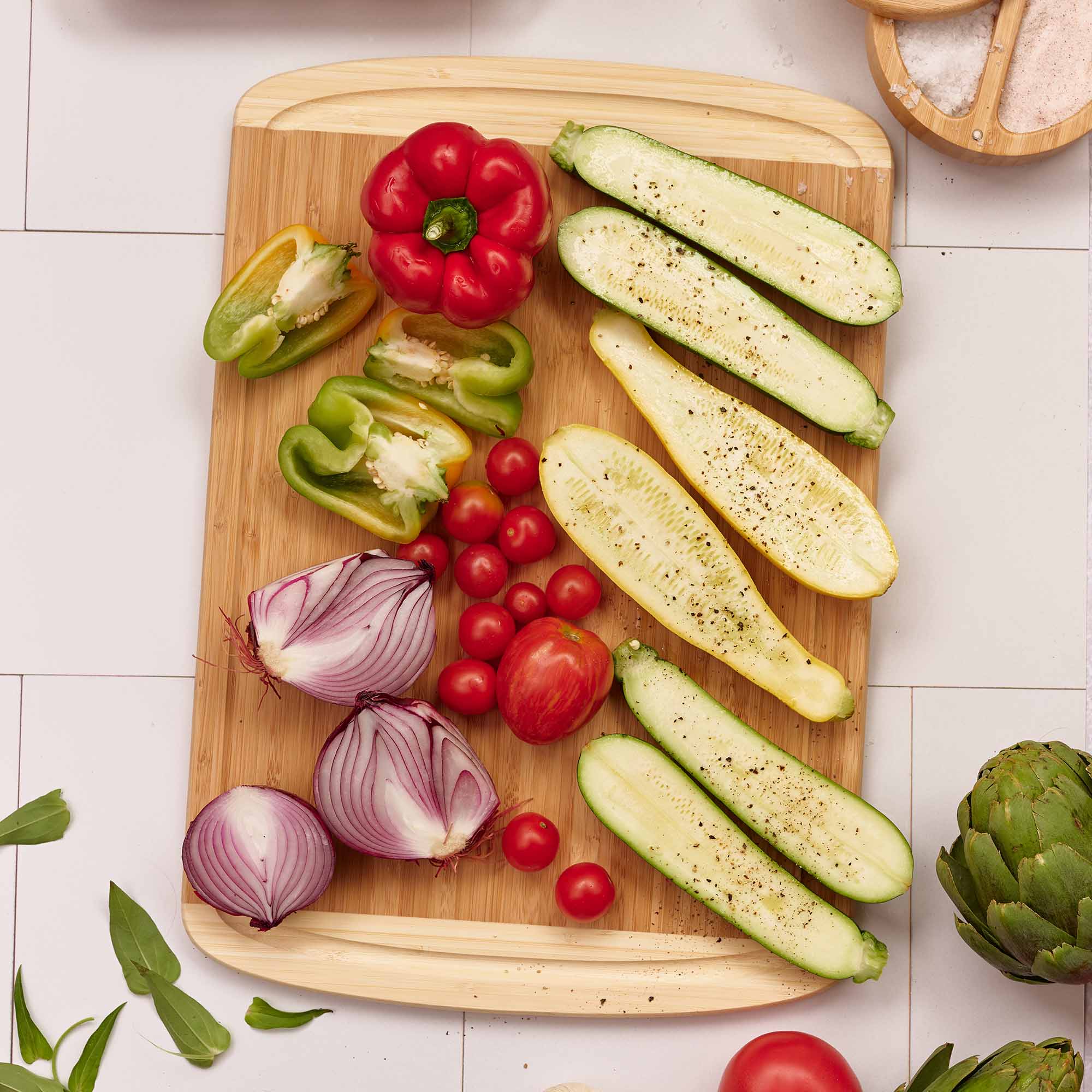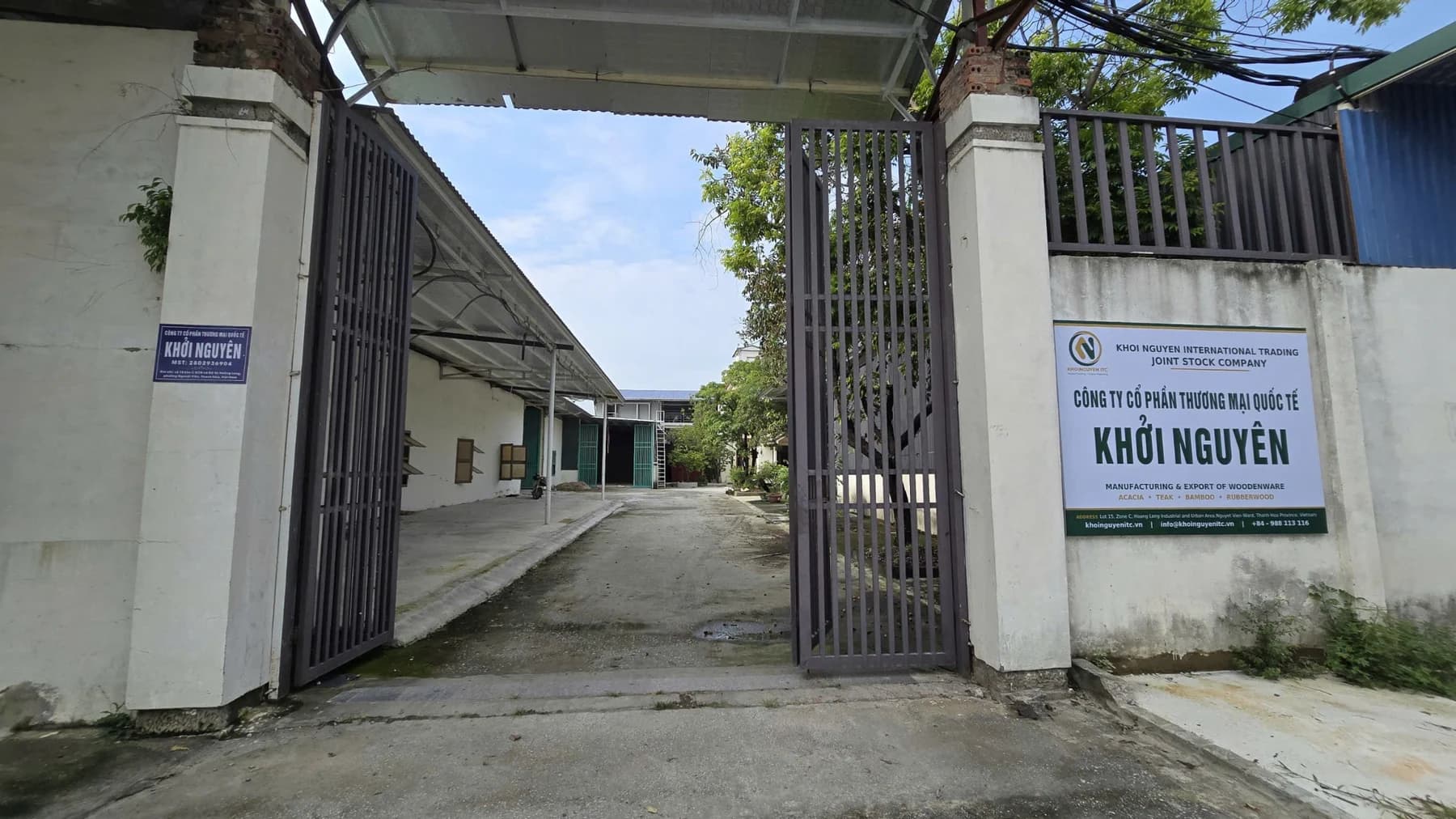
A cutting board’s story begins before its shape is cut or its surface is finished. It starts with the timber—and with the decisions that prepare it for production.
At Khởi Nguyên, that preparation connects the natural character of timber with the requirements of a finished product. For an OEM or private-label collection, species, construction, dimensions and appearance need to work together. Defining those requirements early gives each later stage a clearer starting point.
01 / MATERIAL SELECTION
Start with the material.
Acacia, teak and rubberwood each bring a different visual character to a collection. Selection begins with the intended product: a long serving board, a compact cutting board or a patterned construction will call for different component sizes and layouts.
Visual sorting considers grain, colour variation and visible defects alongside usable dimensions. The aim is to retain the character that makes wood appealing while defining an acceptable appearance for the collection. A reference sample helps turn descriptions such as “warm tone” or “balanced contrast” into something buyers and production teams can review together.
02 / MOISTURE CONDITIONING
Prepare for consistency.
Wood exchanges moisture with its surroundings, and changes in moisture can affect its dimensions. Conditioning and moisture checks therefore matter before components are assembled. The appropriate target depends on the material, product construction and expected conditions of use; it should be agreed as part of the product specification.
Khởi Nguyên’s investment includes two dedicated moisture-conditioning rooms, with a planned combined room volume of more than 300 m³. The project is intended to provide a more controlled environment for preparing material before production.
AN INVESTMENT IN MATERIAL PREPARATION
02
Dedicated conditioning rooms
300+ m³
Planned combined room volume
03 / COMPONENT PREPARATION
Define the component.
Once material is ready for machining, the focus moves to dimensions and profiles. Four-side moulding supports the preparation of timber components with controlled width, thickness and edge geometry. These details provide the basis for an orderly panel layout and the intended finished shape.
Construction guides the preparation. An edge-grain board requires coordinated strips; an end-grain board requires a different cutting and assembly sequence. Herringbone and two-tone designs also need an agreed layout. Drawings and samples should define grain orientation, pattern proportions and machining allowances before production begins.
“A consistent collection begins with a clearly defined component.”
04 / READY FOR THE NEXT STAGE
Connect the next steps.
Prepared components move into the relevant panel-construction and shaping sequence, followed by surface preparation and the agreed finish. Wide-belt sanding belongs later in that process, helping prepare a consistent surface before oiling, coating or final finishing.
For buyers, the practical starting point is a clear brief: material, construction, finished size, appearance, intended use and destination market. These decisions connect timber preparation with sample approval—and help the finished collection express the brand it is made for.