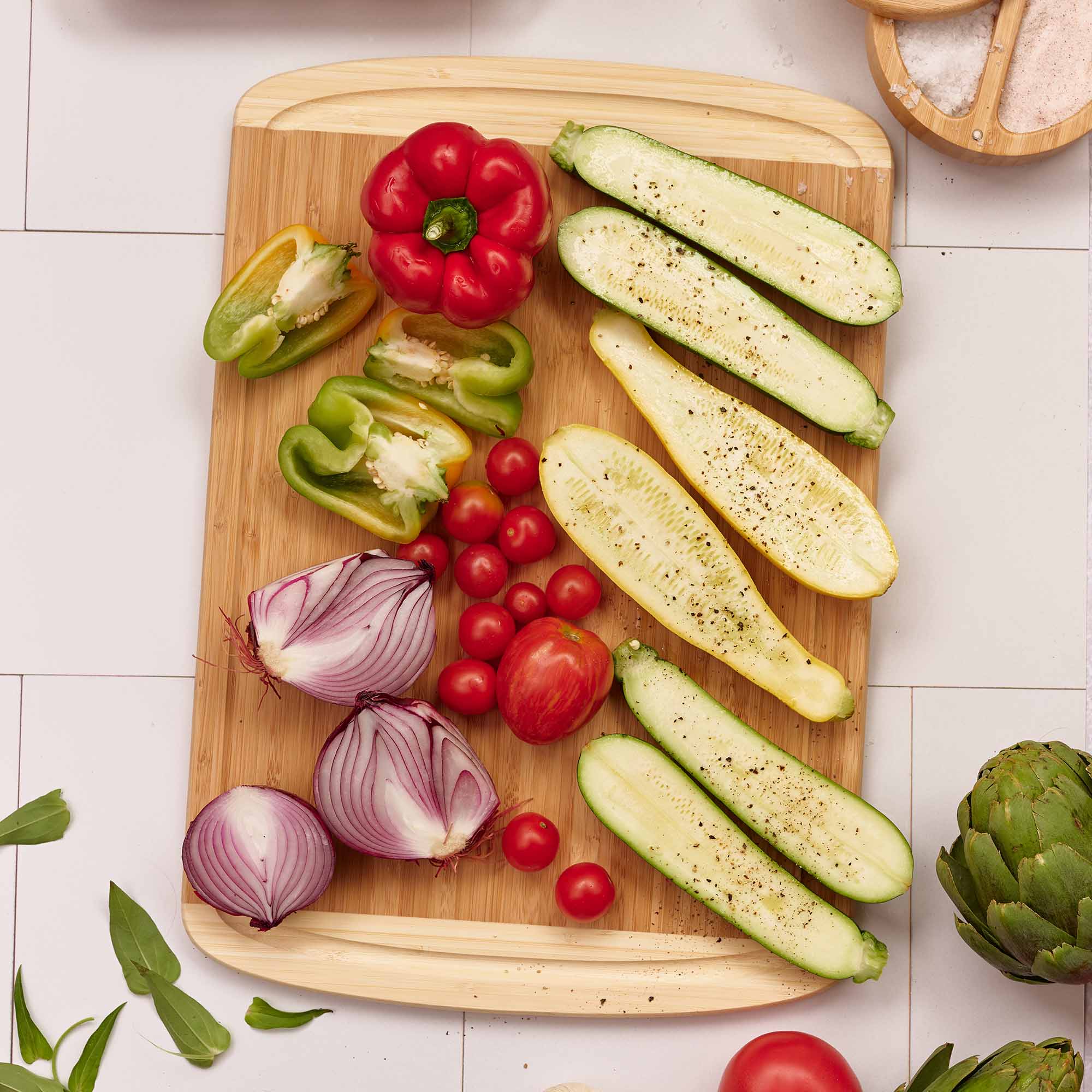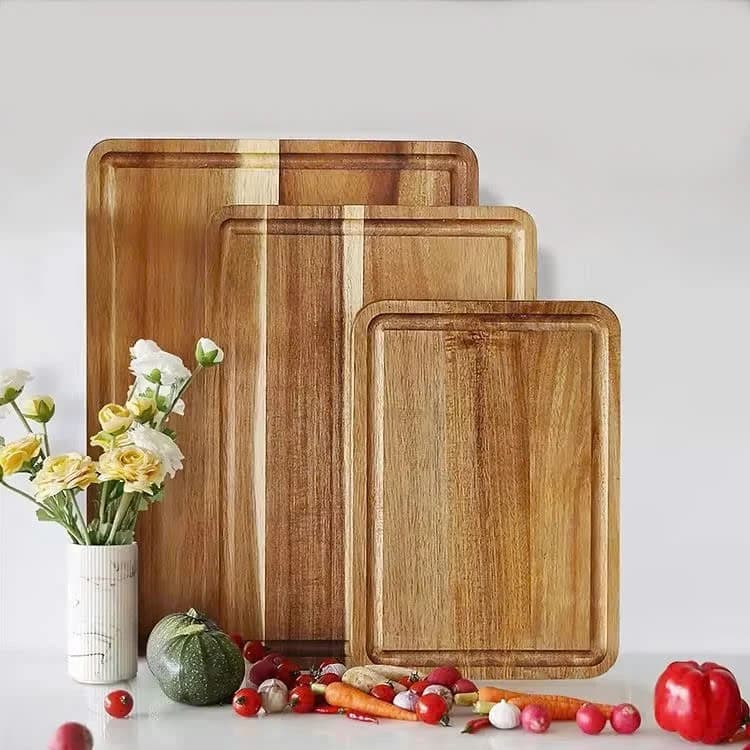
A strong collection can begin with one familiar material, one construction and a handful of well-chosen shapes.
Acacia brings variation to the table: light and dark strips, flowing grain and a warm overall character. In an edge-grain board, strips are assembled with their long narrow edges forming the working face. The resulting linear layout can connect everyday cutting boards with serving pieces while leaving room for each format to have its own purpose.
02 / BUILD THE RANGE
Give every shape a role.
Start with the jobs the range needs to cover. A compact rectangle provides an accessible everyday format. A grooved board adds a distinct preparation option. A paddle gives the collection a serving expression and a different silhouette on the shelf.
A size family could begin with 30 × 20, 35 × 25 and 40 × 28 cm rectangles. Treat these as development references: final dimensions, thickness and tolerances belong in the approved specification. For paddles, distinguish the total length from the usable serving surface.
| Format | Collection role | Detail to resolve |
|---|---|---|
| Classic rectangle | Everyday preparation; a foundation for a size family. | Usable surface, thickness and edge comfort. |
| Juice-groove board | A preparation format with a defined perimeter channel. | Groove width, depth and remaining cutting area. |
| Serving paddle | Cheese, bread and shared-table presentation. | Handle length, balance and display space. |
03 / FINISH THE FAMILY
Design the details together.
Branding, finishing and packaging work best when considered alongside the board. A laser mark needs an agreed position and a legible result across the accepted colour range. A sleeve should reveal enough material to communicate the product, while protecting the areas that matter during handling.
Sets deserve their own review. Check how the boards nest or stack, whether their proportions look balanced together, and how a shopper understands the difference between the sizes. A set should feel deliberately composed, with each piece earning its place.
THE IDEA
“A collection feels connected when its details speak the same language.”
04 / MOVE INTO DEVELOPMENT
Make the brief easy to build.
A useful starting brief includes the intended use, material, edge-grain construction, dimensions, appearance reference and destination market. Add the edge treatment, groove or handle drawing, branding artwork, finish requirements and packaging concept.
Review the first sample as a complete product: look, feel, dimensions, markings and presentation. Record the decisions before extending them to other formats. That approved reference becomes the link between one attractive board and a coherent collection.